Poetry is… 20

Sent in by Jayne B. Sept 2021 from the Daily OM

Sculpting your thoughts into a poem can take you on a journey where your conscious mind is momentarily cast adrift. The creation of any kind of art can be as much a form of meditation as a vehicle for self-expression. Energetically splashing colors of paint onto a canvas can be like casting the weight of the world off your shoulders, while raising your voice to hit the high notes of a song can inspire you to release your fears so you can reach new heights in your own life. And then there is the act of meditation that can take place when you create poetry. Sculpting your thoughts and emotions into a poem can take you on a journey into your inner universe where your conscious mind is momentarily cast adrift. 

Like other forms of meditation, writing poetry requires that you stay fully present during the process, rather than focusing on any outcome. In doing so, you release any inhibitions or ideas of “what needs to happen,” so that your thoughts can flow freely through you. When you write poetry, you are able to see the reflections of your innermost self imprinted on a page. 

If you’d like to experience poetry as a meditation practice, you might want to try this exercise: Set aside twenty minutes where you can be alone in a quiet space. You may want to look at poems other people have written to see if there is a style of poetry you would like to try. You can also try writing in freeform. The structure of the poem will then organically reveal itself to you. When you are ready, sit down with pen and paper and let the words flow. Don’t think about what you are going to say next, and don’t worry about spelling, grammar, or logic. Instead, be as descriptive, visually precise, rhythmic, or lyrical as you want to be. When you feel complete, put the pen down, and read over what you’ve written. Appreciate this work of art you have created. You may even find that thoughts and emotions you had repressed before are now making themselves known so you can process and release them. Writing poetry as a form of meditation lets you slow down your mind long enough for you to get out of your own way, so that your soul can freely express its deepest yearnings.

And the Snow Fell…

On a hill,

In the countryside,

Stood an old log cabin.

Inside,

A bearded old man

Sat in his rickety rocker

Where he wove

Fanciful stories

That always had

Happy endings.

Clustered

At his feet,

Were

A great gathering

Of tiny children

Who listened

Attentively.

As the friendly fire

Sparkled and crackled,

And the old man’s

Faithful hound

Rested contentedly

By the hearth,

The snow fell

Quietly,

Outside the frame

Of the wooden Windowsill

Poetry Is…19

The story of poetry has four phases in the last 300 years. There is Romanticism, Symbolism, Modernism, and Postmodernism. The Industrial Revolution sparked Romanticism, which was a time of a new, revolutionary outlook based on personal emotions. The inspiration of the arts and different ideas had the feeling of new beginnings. When people picture poets, it is from this time that the image is usually visualized. Lyric poetry, which was personal and intense was the popular style of poetry of the age. This gave a new vision of the universe and humanity’s place in it. The poetry was simpler. The ode was also popular and was passionate with a nature theme. The sonnet was written and was fashionable.

Science and technology in the Victorian period, saw big changes in poetry. Symbolism, the poetic movement, evoked feelings through poetry. It used magical language full of metaphors and similes to create states of feelings or awareness.

Modernism saw poetry through images in which the meaning of the poem was not stated straight out and which used a series of complex associations to intrigue the reader. There was less structure to the poem, and free verse, with no rhyme scheme and no meter, was introduced. Ballads were popular forms of poetry. The 20th century, saw an economic depression and two world wars. Information was more readily spread through radio, television, and telephone. There was experimentation and a radical break from the past, including poetry about the forbidden side of life. Imagism was a movement that was influenced by Greek classical poetry, Japanese haiku, and French Symbolism. Poems were short and direct, and delightful, more humorous. Originality became the new kind of poetry. Surrealism (a movement in the arts, literature, and film) explored the unconscious and topics like life and death.

The Postmodern period saw irony as a common thread. It questioned the establishment, and saw political controversy, a movement for human rights, and the emergence of feminism. Slam poetry has become popular, as poets recite their works in public forums. The poetry is often impromptu, crass, or harsh. Rap and hip-hop have became popular. There has been a mixing of styles, traditions, and ethnicities. Some poems rhyme, some don’t. Prose has become popular.

Through the last 300 years, poetry has changed and become the artform that anyone can write or read. It takes thought and feeling to understand and appreciate poetry in all its forms. It will be interesting to see where poetry goes from here.


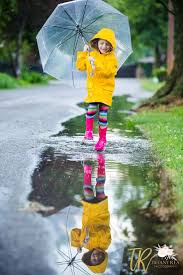
Splish, Splash

Splish, splash

Through pools of puddles

The little girl,

In a yellow raincoat

And red gumboots,

Twirled

Her green umbrella

Thoughtfully

As the spring rain

Showered down

From the cloud-ridden

Sky.

Children have fun wherever they are. They could teach us adults a little about making the best of things and finding joy in the smallest things. Their joys are big and their troubles are few. Their job is to play; it gives them life skills and social skills. As adults, our work should be our play. What’s the point of doing something that doesn’t give a person some sort of satisfaction? Life is play, for big adult kids and regular growing kids, or at least it should be. We continue to grow and learn our whole lives. The person who laughs regularly and keeps on dancing, is the one who will have a long and happy life. The elders teach the young life skills, the young teach the elders to keep questioning and never stop wondering about life. It is the “Circle of Life”: forever learning about the world around them.